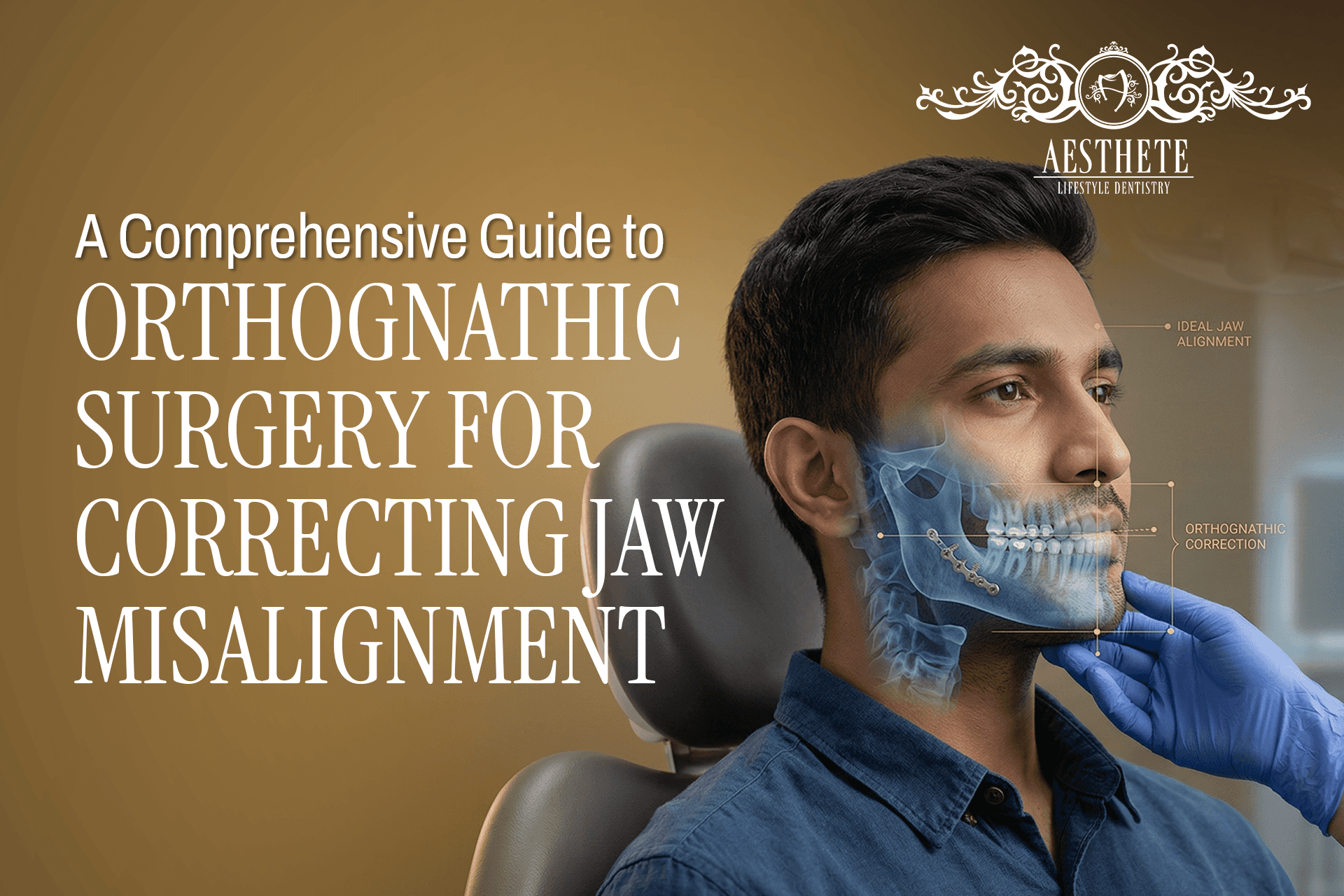
A Comprehensive Guide to Orthognathic Surgery for Correcting Jaw Misalignment
Introduction
"My jaw never felt right. I had lived with it for so long I assumed it was just... how I was made."
That is the experience of most patients who ultimately undergo orthognathic surgery, and it is a profoundly telling one. Jaw misalignment does not announce itself loudly. It accumulates: in the persistent ache behind your eyes after meals, in the way you compensate without thinking when you bite, in the gradual wearing down of teeth that were never meant to meet the way they do.
The clinical reality is well-established. Skeletal jaw misalignment, classified medically as dentofacial deformity, affects a significant percentage of the adult population and cannot, in most cases, be resolved through orthodontic treatment alone. According to the American Association of Oral and Maxillofacial Surgeons, approximately 10 15% of malocclusion cases require surgical intervention to achieve functional correction. Braces move teeth. Orthognathic surgery for jaw misalignment repositions the bones themselves.
This guide takes you through the entire journey, from the first clinical signs that something is structurally wrong, through the surgical process itself, and into the recovery and long-term outcomes that follow. It is written not to frighten, but to inform. Because the patients who fare best are invariably the ones who understood, from the outset, exactly what they were undertaking, and why.
The Moment Everything Changes, Recognising a Jaw Problem
Most patients arrive at the conversation about jaw surgery not through a single dramatic event, but through an accumulation of symptoms they have long normalised. The clinical presentation of skeletal jaw misalignment is varied, and frequently under recognised.
Common Clinical Indicators
Chronic jaw pain, facial fatigue, or temporomandibular joint (TMJ) discomfort
Difficulty biting or chewing certain foods, particularly tearing, cutting, or grinding
Obstructive sleep apnoea or habitual mouth breathing
Visible facial asymmetry, one side of the face appearing higher, flatter, or more prominent
A persistent open bite (upper and lower front teeth that never meet)
Speech articulation difficulties, particularly with sibilants and fricatives
Persistent headaches arising from overcompensating jaw musculature
Recognising these signs as structural in origin, rather than muscular or dental, is the essential first clinical step. It opens the door to a solution that is not merely symptomatic management, but genuine anatomical correction.
What Is Orthognathic Surgery? A Clinical Overview
Orthognathic surgery, from the Greek orthos (straight) and gnathos (jaw), is a class of surgical procedures designed to correct skeletal discrepancies of the jaw and lower face. It is performed by an oral and maxillofacial surgeon, almost always in close coordination with an orthodontist.
The Three Principal Procedures
Le Fort I Osteotomy, repositions the upper jaw (maxilla) upward, downward, forward, backward, or rotationally to correct vertical and horizontal discrepancies
Bilateral Sagittal Split Osteotomy (BSSO), repositions the lower jaw (mandible), most commonly used for underbite or severe overbite correction
Genioplasty, surgical repositioning of the chin bone (mentum), performed independently or as an adjunct to maxillary or mandibular surgery for facial balance
These procedures may be performed individually or in combination, depending on the nature and complexity of the skeletal discrepancy. A bimaxillary osteotomy, involving simultaneous repositioning of both jaws, is indicated in patients with discrepancies in both the maxilla and mandible.
When Is Surgery Indicated?
Orthognathic surgery is indicated when the severity of jaw misalignment exceeds the corrective capacity of orthodontics alone. Specific indications include:
Class III malocclusion (underbite) with a skeletal basis
Severe Class II malocclusion (overbite) with mandibular deficiency
Anterior or posterior open bite caused by vertical skeletal disproportion
Significant facial asymmetry arising from unequal jaw growth
Obstructive sleep apnoea attributable to mandibular or maxillary positioning
The Consultation: Where Your Journey Formally Begins
The surgical consultation is not a formality, it is the most diagnostically intensive appointment in the entire treatment pathway. At Aesthete Lifestyle Dentistry, the assessment protocol is designed to build a complete three-dimensional picture of the patient's skeletal, dental, and soft tissue anatomy before any treatment recommendation is made.
What the Consultation Involves
Detailed clinical and medical history review
Extra-oral and intra-oral photographic records
Dental impressions or digital intraoral scanning
Panoramic and lateral cephalometric radiographs
Cone Beam CT (CBCT) imaging for three-dimensional skeletal analysis
Cephalometric tracing and skeletal classification
Virtual Surgical Planning (VSP), using digital simulation to plan the precise surgical movements before the procedure
Virtual Surgical Planning deserves specific mention. This technology allows the surgical team to simulate the exact bone movements in three dimensions on a computer model of the patient's skeleton. Titanium fixation plates are custom-fabricated in advance. By the time the patient enters the operating theatre, the surgical movements have already been executed, measured, and refined digitally. The operating theatre becomes, in effect, the final confirmation of a decision already thoroughly tested in simulation.
Pre-Surgical Orthodontics: The Foundation Phase
One of the most consistent points of confusion for prospective patients is this: before the surgery that will correct their jaw, their teeth may temporarily look and feel worse. This is not an accident, it is a clinical necessity.
Pre-surgical orthodontics involves aligning the teeth within each jaw arch independently, removing the dental compensations that the patient has accumulated over years of living with a misaligned bite. The teeth are positioned so that, once the jaw bones are repositioned surgically, the dental arches will fit together in their correct relationship.
What Patients Can Expect
Duration: typically, 9 18 months of orthodontic treatment prior to surgery
Fixed braces are most commonly used during this phase for precise control
The bite may worsen in appearance temporarily before surgery, this is expected and clinically correct
Progress records (X-rays, photographs, scans) are taken at intervals to confirm surgical readiness
Inside the Operating Theatre: What Happens During Surgery
Orthognathic surgery for jaw misalignment is performed under general anaesthesia, typically in a hospital setting. All incisions are made inside the mouth, there are no external scars. The procedure duration ranges from approximately 2 5 hours depending on whether one or both jaws are being repositioned and the complexity of the movements required.
The Surgical Sequence
The patient is placed under general anaesthesia. Intraoral incisions are made to access the jaw bones.
The jaw bone is precisely cut along pre-planned lines using piezoelectric surgical instruments or conventional saws, a process called an osteotomy.
The bony segment is moved to the pre-planned position using the custom surgical guides produced during the Virtual Surgical Planning phase.
The repositioned bone is secured in its new position using titanium plates and screws. These fixation devices are biocompatible, permanent, and do not require removal in most cases.
Incisions are closed with absorbable sutures. The patient is gradually brought out of anaesthesia and transferred to recovery.
Hospital stay is typically one to two nights for single-jaw procedures and two to three nights for bimaxillary surgery. Post-operative swelling, bruising, and temporary altered sensation in the lips and chin are expected and resolve progressively over the following weeks.
Recovery, Healing, and What to Realistically Expect
The recovery from orthognathic surgery proceeds in predictable stages, and understanding those stages in advance substantially reduces patient anxiety. The Aesthete clinical team provides each patient with a detailed, week-by-week recovery protocol.
Recovery Timeline
Days 1-3: Peak swelling and facial bruising. Liquid diet. Rest essential. Pain managed with prescribed analgesia.
Week 1-2: Swelling begins to resolve. Soft liquid diet continues. Limited physical activity. Return to remote or desk-based work typically possible.
Week 3-4: Significant visible improvement in swelling. Blended and soft foods introduced. Most patients resume professional and social activities.
Week 6-8: Bone healing progressing well. Soft regular diet permitted. Full physical activity gradually reintroduced.
Month 3-6: Residual swelling continuing to resolve. Post-surgical orthodontic refinement begins.
Month 9-12: Final aesthetic result fully visible. Post-surgical orthodontic treatment concludes with retention protocol.
Life After Jaw Surgery: Functional and Aesthetic Outcomes
The outcomes of correctly planned and executed orthognathic surgery are among the most durable and wide-ranging in all of dentofacial care. They are not merely cosmetic, they are structural and functional corrections that transform daily life.
Documented Clinical Outcomes
Improved masticatory efficiency: patients report the ability to bite and chew foods that were previously impossible or painful
Resolution or significant reduction of TMJ pain and jaw muscle strain
Measurable improvement in airway patency in sleep apnoea cases, often reducing or eliminating dependence on CPAP therapy
Enhanced speech clarity and articulation, particularly in cases of open bite correction
Stable long-term results, skeletal repositioning achieved through osteotomy is inherently more stable than tooth movement alone
Aesthetic Transformation
Facial harmony and balance are natural consequences of skeletal correction, not the primary objective, but a highly valued secondary outcome. Patients frequently describe a sense of finally recognising themselves in the mirror, rather than the distorted facial profile that misalignment had produced over years of development.
Myth-Busting: What Patients Get Wrong About Corrective Jaw Surgery
Misinformation about orthognathic surgery is widespread and frequently prevents patients from pursuing treatment that would meaningfully improve their quality of life. The following table addresses the most clinically significant misconceptions.
MYTH | CLINICAL FACT |
Jaw surgery is purely cosmetic and not medically necessary. | Orthognathic surgery is a functional procedure. It corrects impaired chewing, breathing obstruction, TMJ dysfunction, and speech impediments, conditions with significant health consequences. |
Recovery takes many months and is incapacitating. | Most patients return to desk work within 2 3 weeks. Full dietary freedom and physical activity are typically restored within 6 8 weeks. |
The results will make my face look unnatural or over-operated. | With 3D virtual surgical planning, surgeons pre-visualise outcomes precisely. Changes are calibrated to enhance natural facial balance, not alter the patient's fundamental appearance. |
Orthognathic surgery is only for teenagers and young adults. | Adults of any age are suitable candidates provided they are in good general health. There is no upper age limit for corrective jaw surgery. |
Braces alone can fix my jaw problem. | Orthodontic treatment moves teeth; it cannot reposition jaw bones. When the skeletal foundation is misaligned, surgery is the only definitive resolution. |
Why Patients Choose Aesthete Lifestyle Dentistry?
Orthognathic surgery is a high-stakes, multi-phase treatment. The choice of clinical team matters profoundly, not just for surgical skill, but for coordination, communication, and long-term care.
At Aesthete Lifestyle Dentistry, patients undertaking the orthognathic surgery pathway benefit from:
An integrated multidisciplinary team, orthodontist, oral and maxillofacial surgeon, and restorative dentist collaborating under a single coordinated plan
Advanced 3D CBCT imaging and Virtual Surgical Planning at the diagnostic and surgical planning stage
Clear, transparent treatment roadmaps with realistic timelines and milestone communication
Dedicated case management support throughout the pre-surgical, surgical, and recovery phases
Premium post-surgical orthodontic refinement and long-term retention protocols
Patients choose Aesthete not only for clinical excellence, but for the confidence that comes from a team that treats the whole patient, not just the jaw.
Key Points to Remember
Orthognathic surgery corrects skeletal jaw misalignment that orthodontics alone cannot resolve, it is a functional medical procedure, not purely cosmetic.
Treatment involves three phases: pre-surgical orthodontics (6 18 months), surgery, and post-surgical orthodontic refinement. The total journey typically spans 18 30 months.
Modern techniques including 3D virtual surgical planning (VSP) make outcomes highly predictable before the patient ever enters the operating theatre.
Full functional recovery occurs within 6 12 weeks; complete bone healing and final aesthetic results are visible at 9 12 months.
Patients report significant improvements in breathing, chewing efficiency, speech clarity, and self-confidence, making this one of the highest-satisfaction procedures in dentofacial care.
Frequently Asked Questions
Q1: How do I know if I need orthognathic surgery or just orthodontic braces?
A: If your jaw misalignment is dental in origin, meaning the teeth are mispositioned but the underlying bone is fundamentally sound, orthodontic treatment alone may be sufficient. If the misalignment is skeletal, meaning the jaw bones themselves are disproportionate or mispositioned, surgery is typically the only way to achieve a functional, stable correction. A comprehensive clinical assessment with cephalometric analysis will determine which category applies to you.
Q2: At what age is orthognathic surgery typically performed?
A: Surgery is performed after skeletal growth is complete, generally at 17 18 years of age in females and 18 21 years in males. Adults of any age are appropriate candidates provided they are in good general health and do not have uncontrolled systemic conditions that would affect healing.
Q3: Will orthognathic surgery change the way my face looks?
A: Yes, but in a precisely planned, harmonious direction. Using Virtual Surgical Planning and 3D imaging, your surgical team will show you the projected outcome before surgery. Changes are calibrated to achieve facial balance rather than dramatically alter appearance. Most patients describe the result as finally looking like a more complete, balanced version of themselves.
Q4: Is orthognathic surgery covered by health insurance?
A: In many cases, corrective jaw surgery for jaw misalignment is partially or fully covered by health insurance when it is performed for functional indications, including impaired chewing, obstructive sleep apnoea, or documented TMJ dysfunction. The team at Aesthete Lifestyle Dentistry can provide the clinical documentation required to support insurance authorisation.
Q5: What is the risk of permanent numbness after jaw surgery?
A: Temporary altered sensation, tingling or numbness, in the lower lip, chin, and cheek areas is common after mandibular surgery and typically resolves within 3 6 months as the inferior alveolar nerve recovers. Permanent sensory deficit is rare when surgery is performed by an experienced maxillofacial surgical team and occurs in fewer than 1 3% of cases according to published clinical data.
From Adjustment to Alignment: Your Final Step Toward a Better Life
Orthognathic surgery for jaw misalignment is not a procedure patient stumble into. It is one they arrive at after years of quietly managing the functional consequences of a structural problem, and finally deciding that definitive resolution is worth pursuing.
The journey is not short. It demands patience through the pre-surgical orthodontic phase, trust in the surgical team on the day of the procedure, and commitment through the recovery months that follow. But the endpoint, a jaw that functions as it was designed to, a face in proper proportion, a quality of life measurably improved, is one of the most rewarding outcomes in all of clinical dentistry.
At Aesthete Lifestyle Dentistry, the orthognathic surgery pathway is built on clinical precision, transparent communication, and genuine commitment to patient outcomes. If you have been told your jaw problem cannot be corrected with braces alone, or if you simply suspect that what you have been living with is not something you have to continue living with, this conversation is worth starting.
Schedule a Comprehensive Jaw Assessment at Aesthete Lifestyle Dentistry.